Jaundice ICD 10 Codes: Complete and Practical Guide for Accurate Medical Coding
March 2, 2026
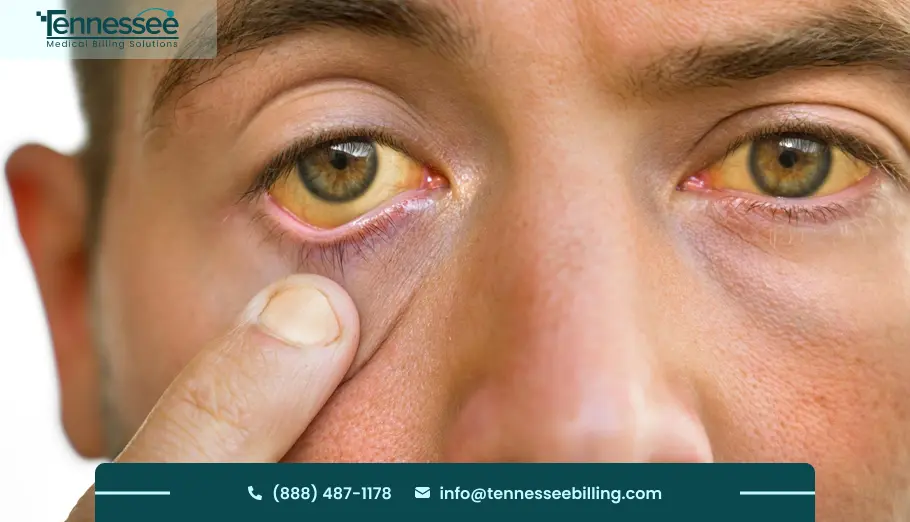
Jaundice is a common clinical finding characterized by yellow discoloration of the skin, sclera, and mucous membranes due to elevated bilirubin levels. In medical billing and coding, selecting the correct Jaundice ICD 10 codes is essential for accurate reimbursement, compliance, and proper documentation.
This guide provides a clear and structured explanation of ICD 10 codes related to jaundice, including neonatal, obstructive, hepatic, and unspecified types. The information is based on official ICD 10 CM guidelines and coding references.
Jaundice is not a disease by itself. It is a symptom or clinical sign caused by hyperbilirubinemia. When coding jaundice, the provider documentation determines whether to report:
The ICD 10 CM coding system classifies jaundice codes under different chapters depending on the cause.
The ICD-10-CM manual is maintained under the broader ICD system developed by the World Health Organization
ICD 10 Code: R17
Description: Unspecified jaundice
R17 is used when the provider documents jaundice but does not specify the cause or type. It falls under Chapter 18 of ICD 10 CM, which covers symptoms, signs, and abnormal clinical findings.
Using R17 when a more specific code is available may lead to claim denials or audits.
Neonatal jaundice has its own coding category under Chapter 16, which covers conditions originating in the perinatal period.
ICD 10 Category: P59
This category includes several specific codes:
Neonatal jaundice is very common in newborns and is usually physiologic. However, it must be coded accurately depending on the provider documentation.
You should never use R17 for a newborn. Always assign codes from the P55 to P59 categories when documentation supports it.
Obstructive jaundice occurs when bile flow is blocked. The coding depends on the underlying cause.
ICD 10 Code: K83.1
Description: Obstruction of bile duct
This code is used when documentation confirms biliary obstruction without further specification.
If obstruction is due to gallstones, use a more specific code from the K80 category.
Examples include:
Accurate documentation must indicate whether obstruction is present and whether inflammation exists.
When jaundice is caused by liver disease, the code assignment depends on the specific diagnosis.
Codes are found in categories B15 to B19.
Examples:
If jaundice is documented as part of hepatitis, do not assign R17 separately unless the provider indicates it is unrelated.
K70.1 Alcoholic hepatitis
If jaundice is part of alcoholic hepatitis, it is inherent in the diagnosis and does not require separate coding.
Always code the confirmed liver disease first. Jaundice is usually considered a manifestation.
Hemolytic jaundice results from excessive red blood cell destruction.
Relevant categories include:
Examples:
If documentation clearly links jaundice to hemolytic anemia, code the anemia. Do not use R17 in addition unless instructed by documentation guidelines.
Sometimes providers document hyperbilirubinemia instead of jaundice.
Includes conditions such as:
When hyperbilirubinemia is documented without the term jaundice, use the most specific E80 category code.
Accurate coding depends on proper documentation. Follow these principles:
If jaundice is due to hepatitis, obstruction, or hemolysis, code the underlying condition.
Do not code R17 when jaundice is inherent to a confirmed diagnosis.
Never use adult symptom codes for neonates.
Clear provider documentation reduces coding errors and claim denials.
Documentation: Patient presents with yellow sclera. Labs pending. Diagnosis: Jaundice.
Code: R17
Documentation: Obstructive jaundice due to a bile duct stone.
Code: K80.51 or appropriate K80 code
Do not add R17.
Documentation: Physiologic neonatal jaundice.
Code: P59.9 or appropriate P59 code
Do not use R17.
Documentation: Acute hepatitis A with jaundice.
Code: B15.9
No separate R17 required.
Accurate code selection impacts:
Incorrect coding may result in denied claims or compliance issues.
Healthcare organizations rely on precise ICD 10 coding to maintain financial stability and regulatory compliance.
| Condition | ICD 10 Code |
|---|---|
| Unspecified jaundice | R17 |
| Neonatal jaundice | P59 series |
| Bile duct obstruction | K83.1 |
| Gallstone with obstruction | K80 series |
| Hemolytic anemia | D55 to D59 |
| Bilirubin metabolism disorders | E80 series |
| Viral hepatitis | B15 to B19 |
Selecting the correct Jaundice ICD 10 codes requires careful review of provider documentation and adherence to official ICD 10 CM guidelines. R17 should only be used when no specific cause is documented. In most cases, coding the underlying condition is required.
Neonatal jaundice must always be coded using perinatal codes. Obstructive, hepatic, and hemolytic jaundice each have distinct categories that must be applied accurately.
Accurate coding ensures compliance, reduces denials, and supports high-quality healthcare documentation.