How to Bill CPT 11730 & 11732 – Nail Surgery Coding Guide
January 12, 2026
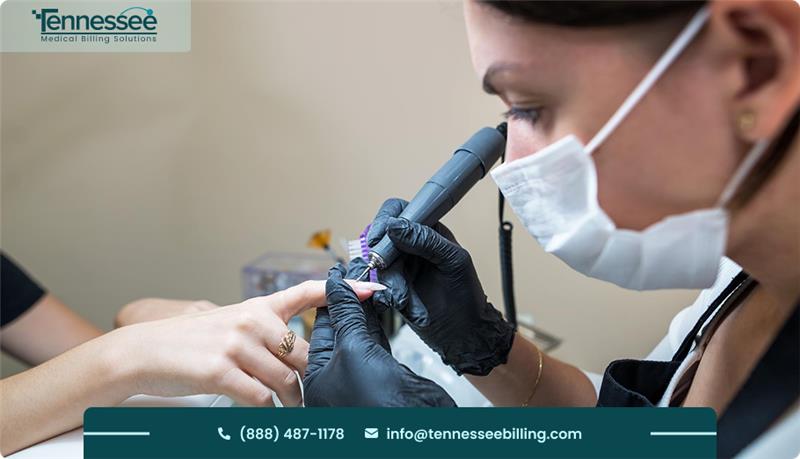
Did you know improper use of nail surgery CPT codes like 11730 and 11732 is a common cause of claim denials for podiatry and dermatology procedures? The improper payment rate for podiatry care reached 11.2% in 2024, with insufficient documentation accounting for 76.4% of these improper payments. These codes are essential for billing correctly for surgical nail plate removal due to conditions such as painful ingrown nails, persistent infections, or trauma.
Accurate use of nail surgery CPT codes improves revenue cycle performance, reduces denials, and supports audit defense. This guide explains the official coding rules, payer policies, documentation requirements, and compliance risks so clinicians and billers can optimize results.
Proper use of nail surgery CPT codes 11730 and 11732 requires a precise understanding of clinical indications and payer rules. These codes represent medically necessary surgical procedures for conditions such as painful ingrown nails, infections, dystrophic nail disorders, or trauma.
According to medical research, ingrown toenails affect approximately 2.5% to 5% of the population, with prevalence increasing in recent years. Studies show that 20 out of 100 people who see their family doctor because of foot problems have an ingrown toenail, making it one of the most common nail conditions encountered in podiatry and dermatology.
Correct coding not only ensures compliance with Medicare and payer requirements but also minimizes claim denials and supports accurate reimbursement. Each code carries specific clinical criteria, documentation expectations, and modifier requirements. Awareness of these factors is essential for practitioners and billers to maintain coding accuracy, reduce audit risk, and maximize revenue from surgical nail procedures.
CPT 11730 is the primary surgical procedure code for simple partial or complete nail plate removal (nail plate extraction) of a single nail due to medically necessary conditions. This code captures physician work, technical service, and minor closure associated with the procedure.
Medicare LCDs and clinical policy sources list surgical nail removal as medically reasonable and necessary for:
These represent conditions where simple nail plate extraction improves symptoms or prevents worsening pathology. Non‑surgical nail trimming or debridement does not qualify as a surgical removal service.
CPT 11730 is bundled with routine anesthesia administered by the surgeon and minor surgical closure. Separate anesthesia billing is generally not permitted.
CPT 11732 is an add‑on procedure code used to report each additional nail plate removal during the same surgical session as the primary nail extraction performed with CPT 11730. It is not valid as a standalone code.
The primary clinical scenario is when a patient requires the extraction of more than one nail due to multi‑digit pathology, such as bilateral ingrown nails or trauma affecting several digits. Each additional nail beyond the first is reported with 11732. Routine trimming or debridement is not a surgical extraction and must be coded separately where appropriate.
CPT 11732 has a Medically Unlikely Edit (MUE) limiting it to 4 additional units on a single date of service, reflecting the practical limit of additional nail extractions in a single session.
Medicare and MAC policies emphasize complete documentation supporting the medical necessity and clinical context for nail surgery CPT codes. Required elements include:
For repeat procedures on the same nail or digit within approximately 32 weeks (8 months), some MACs require additional justification, such as a new or worsening pathology (e.g., opposite border ingrown nail), and may require a KX modifier to indicate that medical necessity is met.
Good documentation prevents denials due to lack of clinical support, frequent edits, and unbundling issues, and it helps satisfy MAC audit requests.
Medicare and payer policies define specific criteria for reimbursing nail surgery procedures. Understanding these rules is critical to ensure claims are processed correctly, prevent denials, and remain fully compliant with federal and local coverage requirements.
While Medicare does not maintain a single national coverage policy specifically for nail surgery codes, Local Coverage Determinations (LCDs) and active Medicare Coverage Database resources define when surgical nail plate removal is medically necessary. Conditions typically supported include ingrown nails unresponsive to conservative therapy, subungual complications, and deformities threatening skin integrity.
Routine trimming, superficial nail chips, or minor debridement without significant pathology are considered non‑surgical and not eligible for 11730/11732 reimbursement.
Coverage policies may differ by jurisdiction and Medicare Administrative Contractor (MAC), so practices must check current LCDs in the Medicare Coverage Database.
Billing compliance issues with nail surgery CPT codes commonly arise when:
Bill 11730 once for the first nail in a session and use 11732 with modifiers for each additional nail. Ensure documentation supports medical necessity, frequency, and clinical rationale.
Although Medicare payment values vary by region and annual fee schedule updates, nail surgery CPT codes are assigned work Relative Value Units (RVUs) that reflect physician effort and complexity compared to other minor surgeries. CPT 11730 generally commands a higher RVU than the add‑on CPT 11732. Accurate coding and modifier use maximize appropriate payment and reduce under‑reimbursement concerns.
| Edit Type | CPT 11730 Rule | CPT 11732 Rule | Denial Impact (CMS Data) |
| NCCI Pairing | Cannot bundle with 11750 (matrix excision) on the same digit [CMS NCCI Manual] | Invalid standalone; requires 11730 | 18% auto-denial rate |
| MUE Limit | 1 unit per nail per DOS | 4 units max per session | Exceed = 100% rejection |
| Modifier Bypass | -59 allowed for separate sites only | No -59; use anatomical only | 12% improper payment |
| Age Restriction | Under 24 months requires special review | Same as 11730 | Audit trigger |
| Frequency Cap | 1 per nail/12 mos without KX modifier | Tracks to primary code | 25% redetermination req. |
Accurate coding and proper documentation are essential for CPT codes 11730 and 11732 for nail surgery. They not only reduce claim denials but also ensure timely reimbursement and compliance with Medicare rules. Implementing pre‑claim audits, correcting modifiers, and detailed clinical notes helps protect your practice from errors and audits.
For practices seeking more comprehensive support, including coding reviews, payer negotiation guidance, and full revenue cycle management, Tennessee Billing offers expert solutions tailored to surgical practices. We make sure that your billing is both efficient and fully compliant.
Use specific ICD‑10 codes tied to pathology, like ingrown nails (e.g., L60.0) or subungual abscess, which align with Medicare’s support for surgical treatment. Accurate diagnosis linkage strengthens medical necessity documentation.
No. CPT 11732 is an add‑on code that must be reported only with CPT 11730 on the same claim; standalone billing is routinely denied.
Some Medicare contractors review repeat procedures within about 32 weeks. Documentation of distinct pathology or the use of a KX modifier may be required for coverage consideration.
Yes. Modifiers like TA–T9 (toes) and F1–F9 (fingers) are essential for indicating which digits were treated and preventing payer confusion or rejections.
No. Routine trimming or superficial nail care is generally not covered as surgical nail plate removal and should be coded separately if needed.

Tennessee Medical Billing is here to help you reduce denials, improve collections, and streamline your revenue cycle